
Costa Blanca North or South: Which Area Is Right for You?
Trying to decide between Costa Blanca North and Costa Blanca South? The difference is about much more than beaches or the appearance of individual properties.
A Costa Blanca North vs South comparison means looking at landscape, property types, walkability, car use, travel routines, maintenance and year-round lifestyle.
The North is often associated with mountains, coves, established coastal towns and hillside villas. The South is more often associated with long sandy beaches, flatter residential areas, apartments, golf communities and international urbanisations.
The right choice depends on how you plan to use the property and the everyday life you genuinely want after you buy.
- Compare Costa Blanca North and South
- Match areas to property types
- Understand walkability and car use
- Compare year-round lifestyle
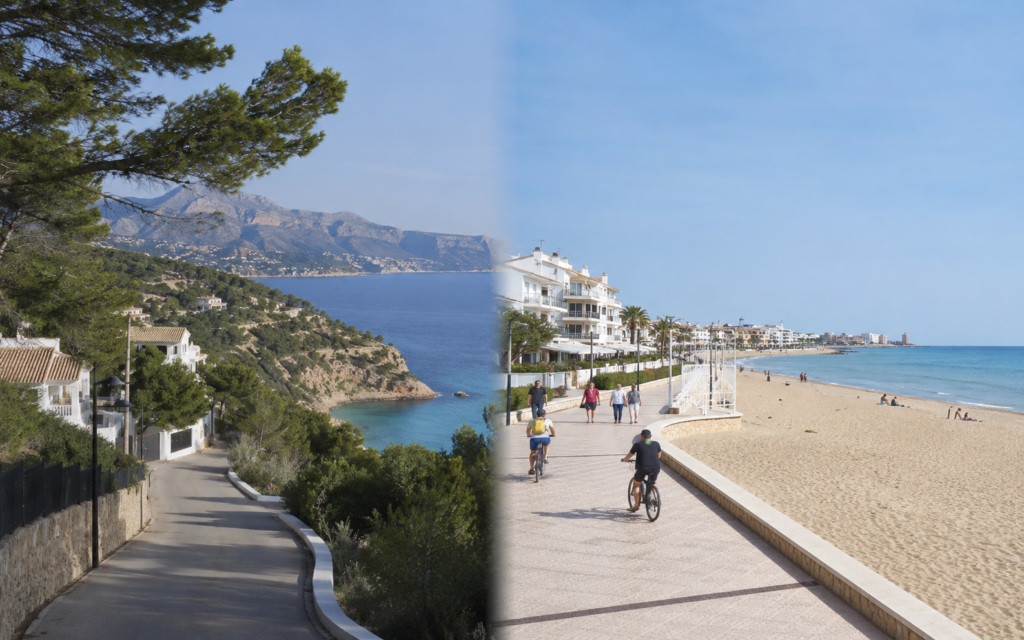
Choosing Costa Blanca North or South Means Choosing a Daily Routine
Buying a home abroad can make it easy to focus on the most emotional features: a sea view, a swimming pool, a sunny terrace or a short walk to the beach.
But when comparing Costa Blanca North and South, the questions that matter most are often more practical.
- Will you need to drive for everyday shopping?
- Can you comfortably manage hills, steps or steep streets?
- Will the area still feel active outside the summer season?
- How much garden, pool or exterior maintenance are you prepared to take on?
- Will the property work when family or friends visit?
- Can you leave the home empty for long periods without unnecessary worry?
- Are healthcare, transport, shops and other everyday services easy to reach?
A beautiful property can become inconvenient when the location does not support the way you actually want to live. A less dramatic home may prove far more suitable if it gives you better accessibility, easier daily routines and a level of maintenance you are comfortable with.
This guide compares Costa Blanca North and South through those practical differences, helping you decide which side deserves more of your property search.
Do not start by asking which side is better. Start by asking which compromises are acceptable to you.
What This Costa Blanca North vs South Guide Compares
Use this guide to compare the practical differences between Costa Blanca North and Costa Blanca South, from landscape and property types to walkability, year-round living and the towns that may suit different buyer priorities.
- Costa Blanca North vs South: Quick Comparison
- Where Costa Blanca North and South Are
- Landscape and Beaches
- Property Types and Residential Settings
- Walkability, Car Use and Accessibility
- Year-Round Living and Seasonality
- Which Side Fits Your Buyer Profile?
- Costa Blanca North Towns to Compare
- Costa Blanca South Towns to Compare
- Costa Blanca North vs South Decision Matrix
- Questions to Answer Before Booking Viewings
- How to Plan a Costa Blanca Property Research Trip
- Frequently Asked Questions
Costa Blanca North vs South: The Quick Comparison
This comparison is a useful starting point, not a rigid rule. Individual towns, neighbourhoods and residential areas can differ more than the broad North–South distinction suggests.
Use these three starting points to decide which part of the Costa Blanca deserves more detailed research.
Start with Costa Blanca North If…
You are most attracted to mountains, coves, greener surroundings, established coastal towns and villas with more privacy or elevated views.
It May Suit You If You Value
- Dramatic coastal scenery
- Villas and private outdoor space
- Distinctive town centres
- Marinas and working ports
- Coves and smaller beaches
- Permanent or retirement living
- Privacy over immediate walkability
Start with Costa Blanca South If…
You are most attracted to long sandy beaches, flatter surroundings, apartments, townhouses, golf communities and international residential areas.
It May Suit You If You Value
- Long sandy beaches
- Flatter terrain in many locations
- Apartments and townhouses
- Communal pools and managed developments
- Golf and residential communities
- Easier access towards Alicante Airport
- Lock-up-and-leave convenience
Compare Both Before Deciding If…
Your priorities depend more on walkability, accessibility, year-round services, property maintenance or daily convenience than on whether a home is technically in the North or South.
Keep Comparing If
- You have not decided between a villa and an apartment
- You do not know whether you will have a car
- Walkability is important to you
- You have mobility or accessibility requirements
- You expect to leave the property empty for long periods
- You have only visited the Costa Blanca during summer
- You are still balancing scenery against convenience
Where Are Costa Blanca North and South?
“Costa Blanca North” and “Costa Blanca South” are useful property-search labels rather than separate administrative regions with one universally agreed dividing line.
For this guide, we use Alicante and the surrounding metropolitan area as a practical reference point when comparing the two sides of the Costa Blanca.
- Costa Blanca North extends along the coast towards Benidorm, Altea, Calpe, Moraira, Javea and Denia.
- Costa Blanca South extends along the coast towards Guardamar del Segura, La Mata, Torrevieja, La Zenia and Cabo Roig.
These broad labels can help you organise an initial property search, but the exact town, neighbourhood and residential setting matter far more than the North–South label alone.
A town-centre apartment in Calpe may be easier to live without a car than an outlying urbanisation in the South, while Guardamar can feel very different from the more development-led image sometimes associated with Costa Blanca South.
The map is a starting point, not a buying decision. Compare the exact town, neighbourhood, road access and daily routes before deciding whether a location genuinely suits you.
Costa Blanca North vs South: Landscape and Beaches
Landscape is one of the clearest differences buyers notice when comparing Costa Blanca North and South.
Costa Blanca North generally becomes greener, steeper and more dramatic, with mountains, coves, hillside residential areas and established coastal towns. Costa Blanca South is generally flatter and more open, with long sandy beaches, promenades and a greater concentration of planned residential developments.
These differences affect more than the view. They can influence walkability, road access, parking, property maintenance, outdoor space and how often you may need to use a car.
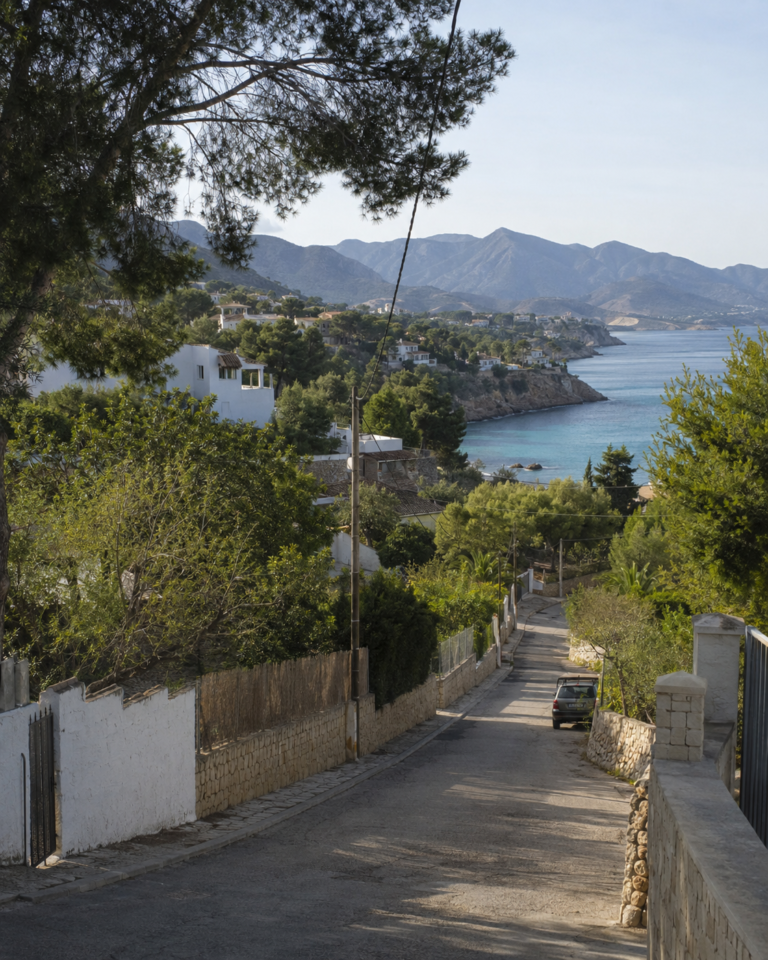
Costa Blanca North: Coves, Mountains and Hillside Living
Costa Blanca North may suit buyers who want scenery, elevation and a stronger connection with the surrounding landscape.
Many residential areas sit above coves, bays or established towns. Detached villas, private plots, winding roads and elevated sea or mountain views are common in a number of northern locations.
The same geography that creates attractive views can also bring steeper access, more exterior maintenance and greater dependence on a car. Texto pegado
Potential Advantages
- Mountain and sea views
- Greener residential surroundings
- Coves and smaller beaches
- Detached villas and private plots
- Greater privacy in some residential areas
- Distinctive coastal and mountain scenery
Check Carefully
- Steep roads and pedestrian routes
- Driving time to shops and services
- Garden and pool maintenance
- Retaining walls and drainage
- Wind exposure on elevated plots
- Accessibility for visitors
- Driving distance to the coast rather than straight-line distance
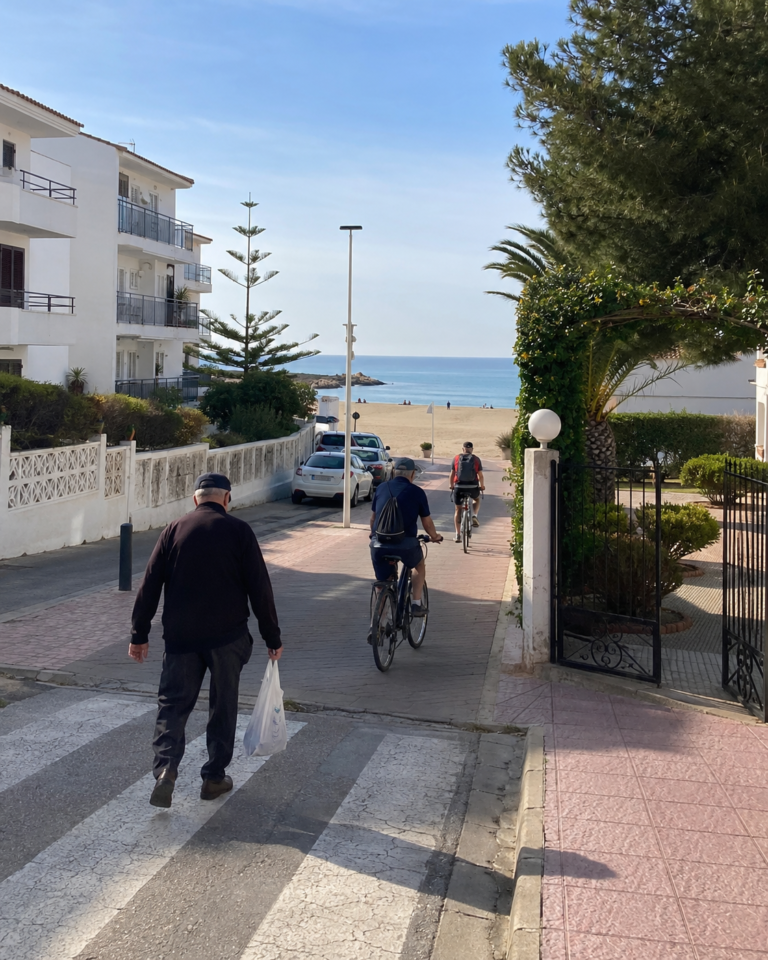
Costa Blanca South: Sandy Beaches and Flatter Residential Areas
Costa Blanca South may suit buyers who prioritise long sandy beaches, flatter terrain and a wider choice of apartments, townhouses and homes within managed residential developments.
Many locations are easier to navigate on foot than steep hillside areas, but flatter terrain does not automatically mean a property is walkable. Some urbanisations still sit several kilometres from beaches, shops or traditional town centres.
The exact location matters as much as the type of development. Texto pegado
Potential Advantages
- Long sandy beaches
- Flatter walking routes in many locations
- Promenades and developed coastal areas
- Apartments and townhouses
- Communal pools and gardens
- Easier movement between some neighbouring coastal areas
Check Carefully
- Actual walking distance to the beach
- Distance from shops and town centres
- Car dependency within larger urbanisations
- Seasonal occupancy
- Community fees
- Differences between similar-looking developments
- Vacant land and possible future construction nearby
Costa Blanca North vs South: Property Types and Residential Settings
You can find apartments, villas, townhouses, bungalows and new-build homes in both Costa Blanca North and Costa Blanca South.
The more useful question is where each property type is concentrated, what kind of residential setting usually surrounds it and what everyday compromises may come with the location.
Hillside Villas
Hillside villas are particularly associated with parts of Costa Blanca North, where elevation, sea views, private plots and winding residential roads can shape the buying experience.
They can offer privacy and impressive surroundings, but the exact location may matter as much as the villa itself.
Check Before Buying
- Road access and steep gradients
- Driving time to shops and services
- Retaining walls and drainage
- Garden and pool maintenance
- Wind exposure
- Long-term exterior upkeep
Beach Apartments
Beach apartments are available throughout the Costa Blanca, especially in established coastal towns, promenades and developed seaside neighbourhoods.
They can suit buyers looking for lower maintenance and easy coastal access, but two apartments advertised as “near the beach” can offer very different daily routines.
Check Before Buying
- Actual walking route to the beach
- Lift access
- Community fees
- Summer noise and activity
- Parking
- Orientation and winter sunlight
- Building condition
Urbanisation Homes
Homes within residential urbanisations are particularly common across Costa Blanca South, including apartments, townhouses, villas and bungalows with shared pools or gardens.
They can provide a convenient managed environment, but the quality of the location varies considerably between developments.
Check Before Buying
- Distance from shops and services
- Car dependency
- Community fees and rules
- Year-round occupancy
- Shared facilities
- Future development nearby
- Walking routes outside the urbanisation
Town-Centre Apartments
Town-centre apartments can be found in established locations on both sides of the Costa Blanca and may suit buyers who prioritise walkability, services, transport and everyday activity.
They often reduce the need for a car, although this can mean accepting less private outdoor space.
Check Before Buying
- Street and neighbour noise
- Parking
- Lift access
- Building age and maintenance
- Community fees
- Natural light
- Private outdoor space
Townhouses and Bungalows
Townhouses and bungalows can offer a useful middle ground between an apartment and a detached villa, with more outdoor space and privacy without the maintenance demands of a large private plot.
They are found in different residential settings across both North and South.
Check Before Buying
- Steps and internal accessibility
- Parking
- Storage
- Community charges
- Terrace and garden upkeep
- Privacy between neighbouring homes
- Distance from everyday services
New-Build Homes
New-build properties are available in different coastal and inland locations across the Costa Blanca.
The age of the property should not distract from the location. A modern home can still be inconvenient if the surrounding area does not fit your daily routine.
Check Before Buying
- Exact development location
- Completion stage
- Included specifications
- Surrounding infrastructure
- Planned construction nearby
- Community arrangements
- Access to shops, healthcare and other everyday services
Town Centre, Beach Area, Urbanisation or Hillside: Which Setting Suits You?
Two properties in the same Costa Blanca town can offer completely different day-to-day lifestyles depending on whether they are in the centre, close to the beach, inside an urbanisation or on an outlying hillside.
Before deciding between Costa Blanca North and South, think about the residential setting you actually want to live in, not only the type of property you want to buy.
Established Town Centre
Best suited to buyers who want shops, cafés, healthcare, public transport and everyday services within a more compact area.
A central location can reduce dependence on a car and make year-round living more practical, particularly for permanent residents and retirement buyers.
Consider
- Street and neighbour noise
- Parking availability
- Apartment or higher-density living
- Less private outdoor space
- Building age and accessibility
- Summer traffic in popular coastal towns
Beach-Focused Neighbourhood
Best suited to buyers who prioritise easy coastal access, promenades, restaurants and frequent personal use of the property.
Being genuinely close to the beach can be very convenient, but the atmosphere and practicality of these areas may change considerably between summer and winter.
Consider
- Summer traffic and parking
- Seasonal noise and activity
- Salt exposure and exterior maintenance
- Property premiums near the coast
- Winter activity and open services
- The actual walking route to the beach
Residential Urbanisation
Best suited to buyers who want communal facilities, quieter internal streets and a managed residential environment.
Urbanisations can work particularly well for second homes and buyers who value shared pools or gardens, but location varies enormously between developments.
Consider
- Distance from town and everyday services
- Car dependency
- Community fees and rules
- Year-round occupancy
- Public transport
- Walking routes outside the development
Hillside or Outlying Residential Area
Best suited to buyers who prioritise privacy, views, larger plots and separation from busier coastal centres.
These settings are particularly relevant when comparing villa areas, especially in parts of Costa Blanca North, where elevation and landscape can be a major part of the appeal.
Consider
- Steep or winding access roads
- Driving time for everyday journeys
- Garden, pool and exterior maintenance
- Emergency and service access
- Accessibility for visitors
- Distance from shops, healthcare and the coast
Costa Blanca North vs South: Walkability, Car Use and Accessibility
“Close to the beach” or “close to town” does not necessarily mean comfortably walkable.
A property can look conveniently located on a map but still involve steep streets, limited pavements, difficult parking or a route that becomes uncomfortable in summer heat.
Walkability depends on the exact address and daily route, not simply on the reputation of the town or whether the property is in Costa Blanca North or South.
Costa Blanca North: Mobility and Walkability
Central areas of Denia, Calpe, Benidorm, Altea and other established northern towns can support a practical walking routine with shops, restaurants and services nearby.
Outside those centres, however, Costa Blanca North can become much more car-dependent. Hillside residential areas, winding roads and separated neighbourhoods may make short distances on a map less practical on foot.
Pay Particular Attention If You Are
- Buying for retirement
- Living with reduced mobility
- Planning to walk to the beach
- Expecting regular visits from people who will not drive
- Buying with only one car in the household
- Considering a hillside or outlying villa area
- Planning to live in the property year-round
Costa Blanca South: Mobility and Walkability
Many parts of Costa Blanca South have flatter terrain, but this does not automatically mean you can live comfortably without a car.
Large urbanisations, golf communities and properties marketed under the name of a nearby coastal town can still sit several kilometres from beaches, shops, healthcare or the traditional centre.
Pay Particular Attention If You Are
- Buying inside a large urbanisation
- Hoping to live without a car
- Relying on public transport
- Choosing between inland and coastal locations
- Looking for year-round services
- Buying a second home for frequent short stays
- Comparing properties using map distances alone
Test These Routes Before You Buy
A property can look conveniently located on a map and still be awkward in everyday life. Before buying, test the journeys you are likely to make repeatedly.
- Property to the nearest supermarket
- Property to your preferred beach entrance
- Property to healthcare and pharmacies
- Property to cafés and restaurants
- Property to public transport
- Property to the town centre
- Property to parking
- Property to the main airport route
- Property to the places you expect to visit every week
Do the walk yourself whenever possible. Test the return journey as well as the outward one, and imagine repeating it in summer, winter and when family or friends are staying with you.
Costa Blanca North vs South: Year-Round Living and Seasonality
Both Costa Blanca North and Costa Blanca South include active year-round towns as well as more seasonal residential areas.
The important distinction is often not North versus South, but whether you are choosing an established town, a beach-focused neighbourhood, an urbanisation or a quieter residential area.
If you plan to live in the property permanently, retire there or spend long periods outside the summer season, year-round practicality matters as much as the appearance of the area.
Everyday Services
Check whether supermarkets, healthcare, pharmacies, cafés, restaurants and practical businesses remain convenient outside the busiest months.
A location that works perfectly in July may feel very different in January.
Permanent Community
Areas with a substantial year-round population can support local businesses, social life, healthcare, everyday services and a more stable rhythm throughout the year.
This can matter particularly for permanent residents, retirement buyers and anyone planning longer stays.
Seasonal Change
Visit promising areas outside the main summer season to understand how traffic, parking, open businesses, street activity and neighbourhood occupancy change through the year.
A quieter winter may be exactly what you want — or it may make the location feel too isolated.
Winter Comfort
Mild outdoor weather does not guarantee that every coastal property feels warm and comfortable indoors.
Check orientation, winter sunlight, glazing, insulation and heating, especially if you expect to use the home throughout the year.
Established towns such as Denia, Calpe, Benidorm and Torrevieja can provide substantial year-round services, but the experience can still vary considerably between neighbourhoods.
Smaller coastal areas and residential urbanisations may offer more peace and privacy, while requiring more planning for shopping, healthcare, transport and everyday services.

Costa Blanca North or South: Which Side Fits Your Buyer Profile?
The same Costa Blanca location will not suit every buyer equally. A retirement home, second home, permanent relocation and family property can require very different things from the surrounding area.
Use these profiles to identify which side of the Costa Blanca may deserve more of your research based on how you actually plan to use the property.
Retirement Buyers
Retirement buyers often need to balance scenery and climate with accessibility, healthcare, everyday services and a property that remains manageable over time.
Costa Blanca North May Suit You When
- You prefer established coastal towns
- Scenery and surroundings are a major priority
- You are comfortable with hills or expect to drive
- You want a villa or lower-density residential setting
- You value character, views and established town centres
Costa Blanca South May Suit You When
- Flatter terrain is important
- You prefer an apartment, bungalow or managed community
- Easier airport access matters
- You want a strong international community
- Lower exterior maintenance is a priority
Second-Home Buyers
A second home should be easy to reach, practical to maintain and realistic to leave empty between visits.
The right side may depend less on scenery and more on how often you expect to travel, how much maintenance you want and whether you will use the property for short or extended stays.
Costa Blanca North May Suit You When
- The setting is worth a longer journey
- You prioritise privacy, scenery or sea views
- You accept more exterior maintenance
- You plan longer or less frequent stays
- A villa or private outdoor space is important
Costa Blanca South May Suit You When
- Airport convenience is a major priority
- You expect frequent shorter visits
- Lower exterior maintenance matters
- A communal pool suits your needs
- You prefer a lock-up-and-leave property
Permanent Relocation
Permanent living requires more than an attractive property or nearby beach. Healthcare, services, transport, internet, social life and the normal winter routine become part of the buying decision.
For relocation buyers, the exact town and neighbourhood may matter more than whether the property sits in Costa Blanca North or South.
Prioritise
- Year-round services
- Healthcare access
- Schools where relevant
- Reliable internet
- Everyday shopping
- Local transport
- Social integration and language
- A practical home for daily life rather than purely seasonal use
Families and Frequent Visitors
Think beyond bedroom numbers. A property may need to work for children, older relatives, visiting friends or several generations using the home at the same time.
Accessibility, parking and practical outdoor space can become just as important as the beach or view.
Prioritise
- Safe everyday access
- Flexible sleeping space
- Parking
- Storage
- Practical outdoor areas
- Easy airport collection
- Beaches and activities
- Access to shops and services
- A layout that works for different generations
Costa Blanca North Towns to Compare
Costa Blanca North is not one single property market. Its towns range from working coastal centres and walkable beach locations to lower-density villa areas, marinas and hillside residential neighbourhoods.
Compare the towns below according to property type, everyday services, walkability, scenery and the way you plan to use your home.

Denia
Denia is a substantial coastal town with a working port, historic centre, long beaches, year-round services and a broad mix of residential areas.
Best For
Permanent living, everyday services, beaches, port life and buyers wanting a wide choice of property settings.
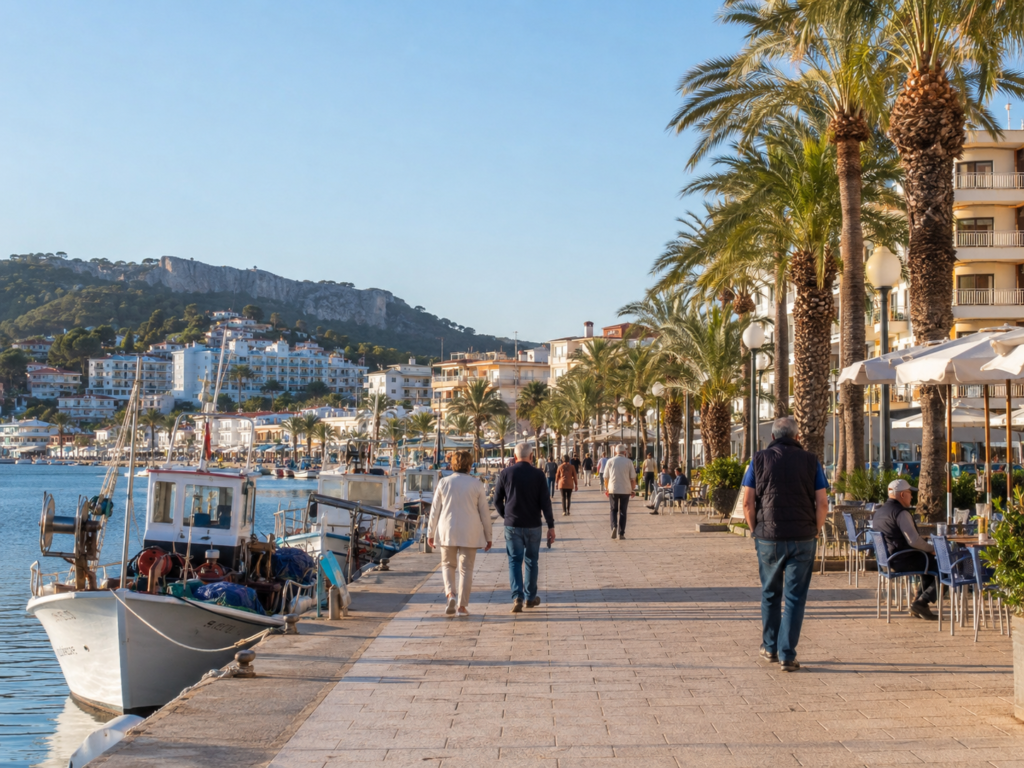
Javea
Javea combines several distinct environments, including the historic centre, Port, Arenal beach area, coves and extensive villa neighbourhoods.
Best For
Villas, scenery, families, international living and buyers wanting a choice between beach, town and residential settings.
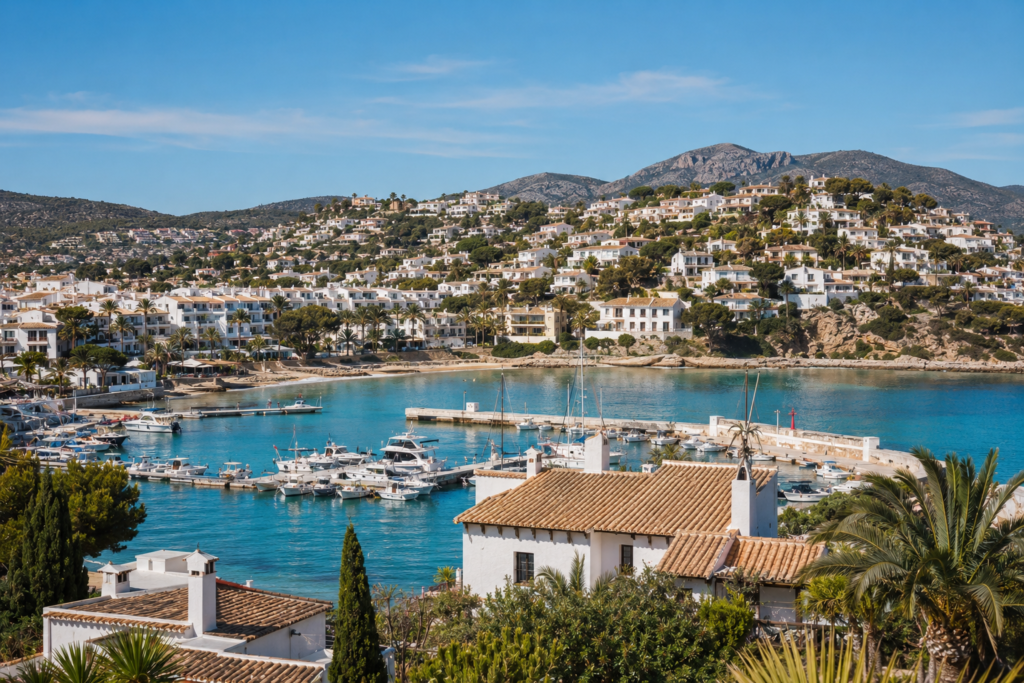
Moraira
Moraira is a smaller coastal location associated with detached villas, coves, marina surroundings and lower-density residential areas.
Best For
Villas, privacy, retirement, second homes and buyers who prioritise a quieter coastal environment.
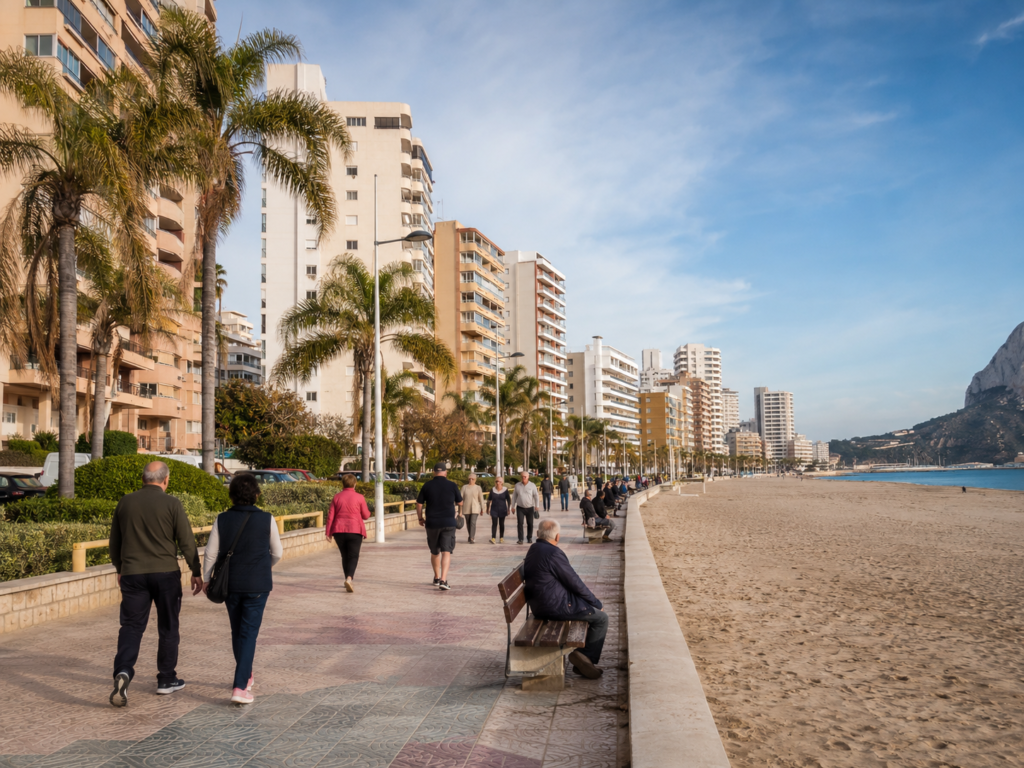
Calpe
Calpe combines sandy beaches, promenades, apartments, villa areas and substantial year-round services within a relatively compact coastal town.
Best For
Apartments, walkability, retirement, sea views and buyers wanting everyday services close to the coast.
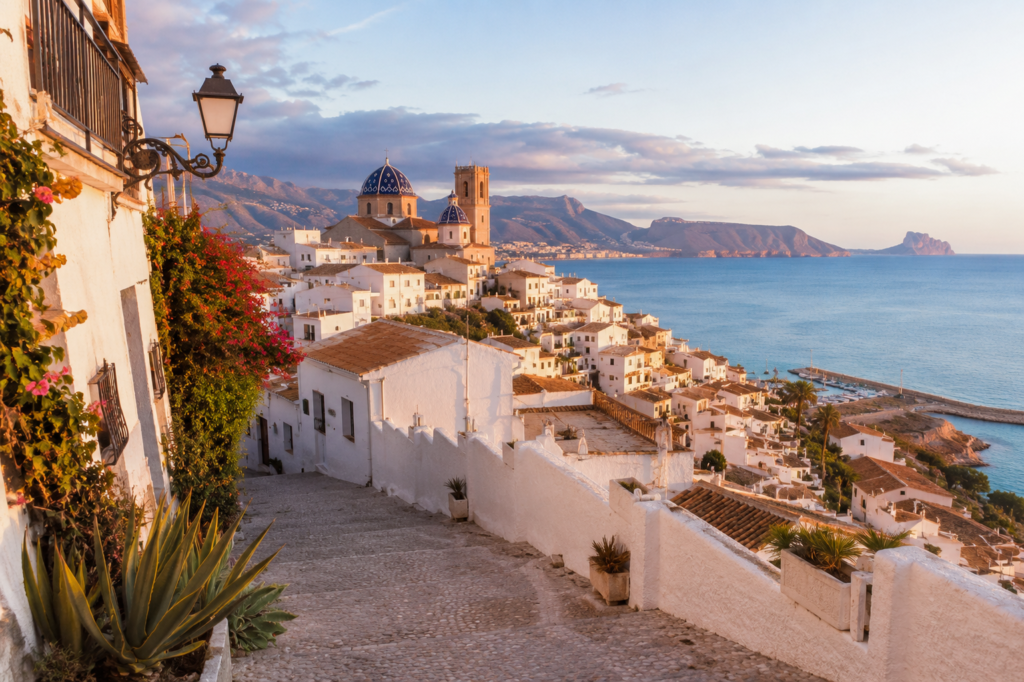
Altea
Altea combines a distinctive historic hillside centre, cultural character, coastal areas and premium residential neighbourhoods with elevated views.
Best For
Character, views, premium homes, quieter residential settings and buyers comfortable with slopes.
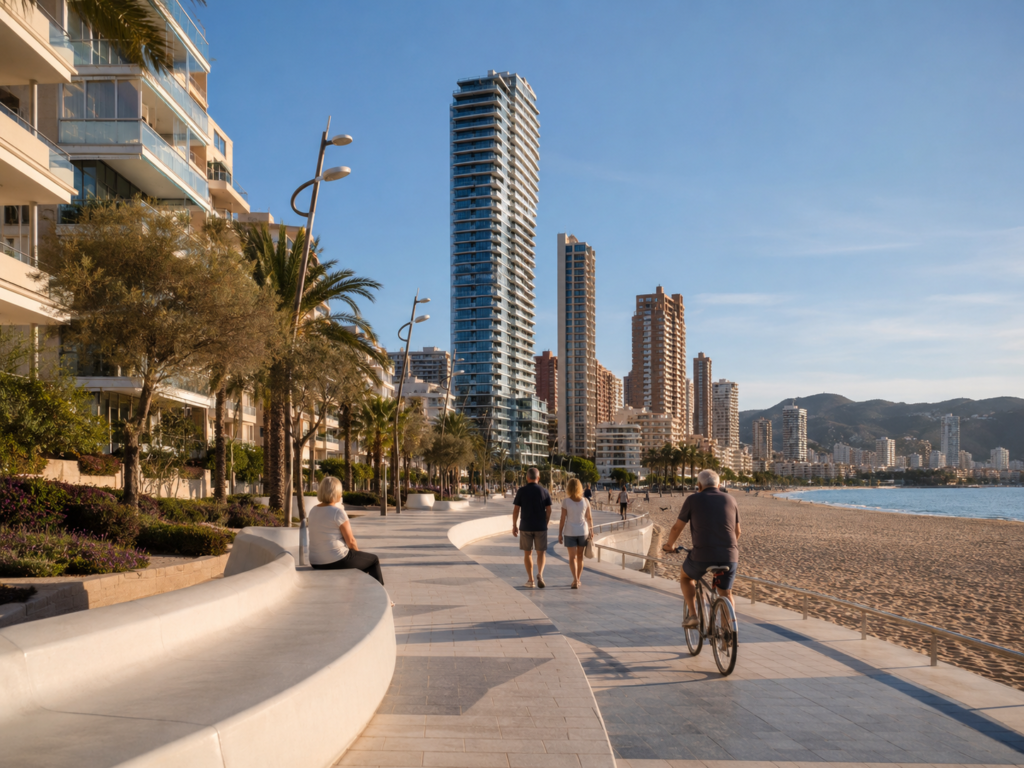
Benidorm
Benidorm is a highly developed coastal city with long sandy beaches, high-rise apartments, extensive public services, transport and active year-round districts.
Best For
Apartments, walkability, transport, everyday services and buyers who prefer a more urban coastal environment.
Benidorm shows why “Costa Blanca North” is only a starting label. Although it sits within the northern part of the Costa Blanca search area, its high-density urban environment is very different from the villa areas and lower-density character found around Moraira or Javea.
Costa Blanca South Towns and Coastal Areas to Compare
Costa Blanca South includes established coastal towns, long sandy beaches, natural environments and international residential areas.
The difference between Guardamar del Segura, La Mata, Torrevieja, La Zenia and Cabo Roig can be substantial, so compare the exact town, neighbourhood and residential setting rather than assuming every southern location offers the same lifestyle.
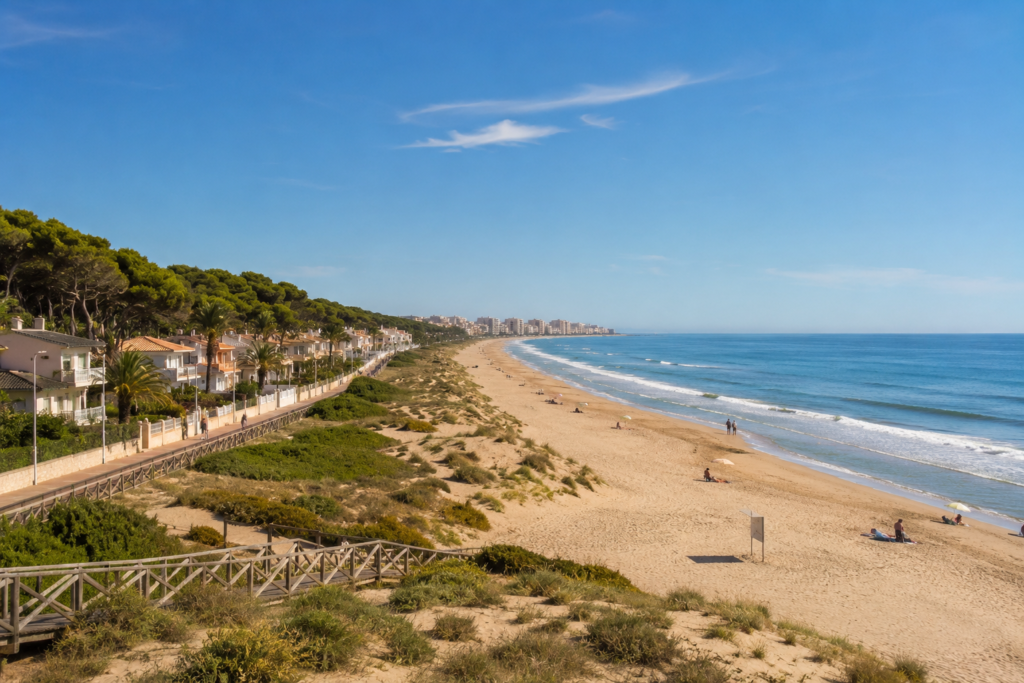
Guardamar del Segura
Guardamar del Segura is a coastal town known for long sandy beaches, dunes, green spaces and a more traditional town structure.
It can suit buyers who want beach access without giving up everyday services and a recognisable town centre.
Best For
Beaches, nature, town living, walkability and permanent or second-home use.
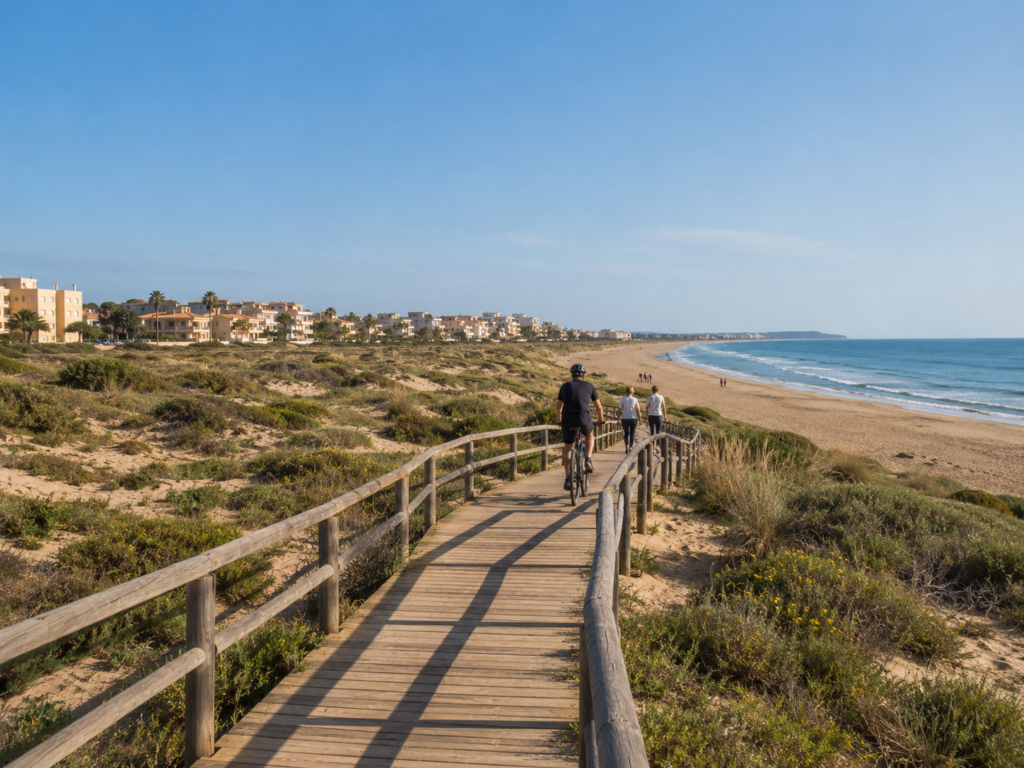
La Mata
La Mata is a quieter coastal area beside Torrevieja with a long sandy beach, natural surroundings and predominantly low-rise residential property.
It can appeal to buyers who want a more relaxed beach environment while remaining connected to the wider services of Torrevieja.
Best For
Beach apartments, quieter coastal living, nature and lower-intensity residential surroundings.
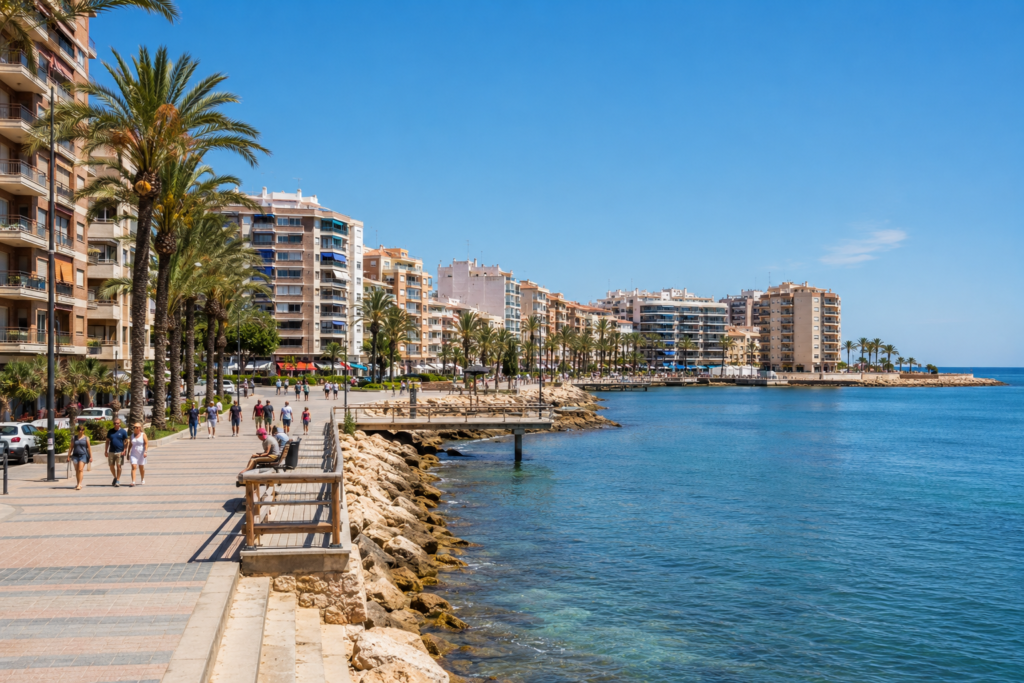
Torrevieja
Torrevieja is a substantial coastal town with apartments, beaches, healthcare, shopping, extensive services and a large international residential population.
Its scale gives buyers a broader range of neighbourhoods and property settings than many smaller coastal areas.
Best For
Year-round services, apartments, practical everyday living and international residents.
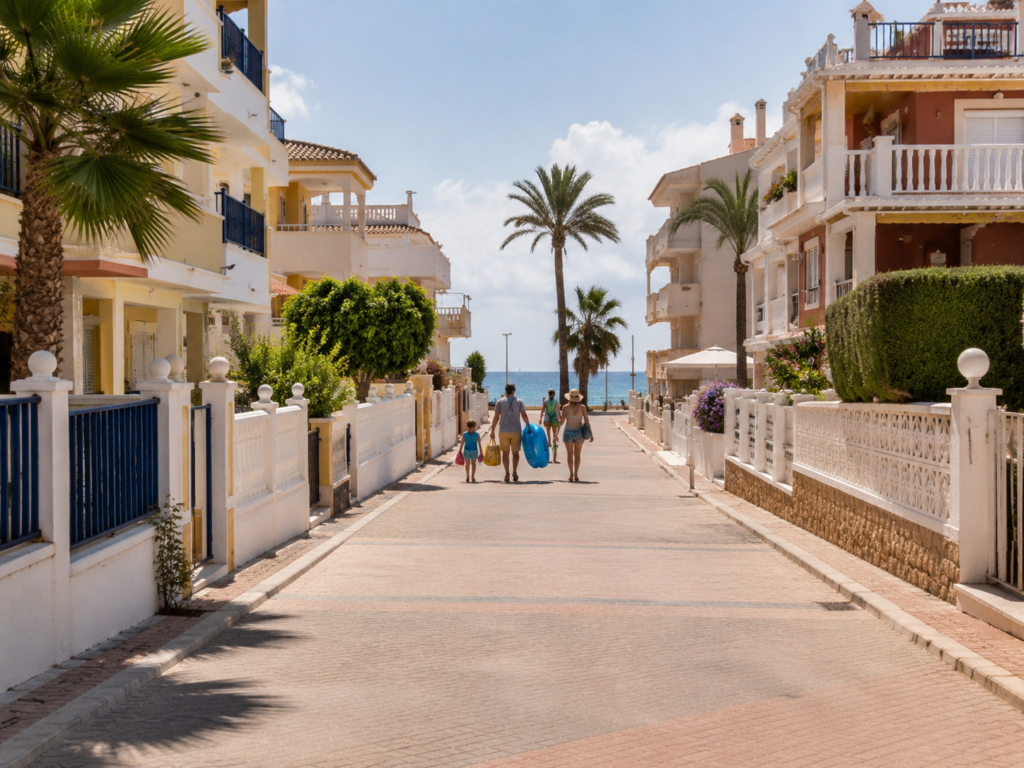
La Zenia
La Zenia is an established Orihuela Costa location with sandy beaches, low-rise urbanisations, apartments, townhouses, restaurants and major shopping nearby.
It is particularly relevant to buyers looking for a practical second-home location within an international residential environment.
Best For
Second homes, beach access, communal pools, restaurants, shopping and international convenience.
Cabo Roig
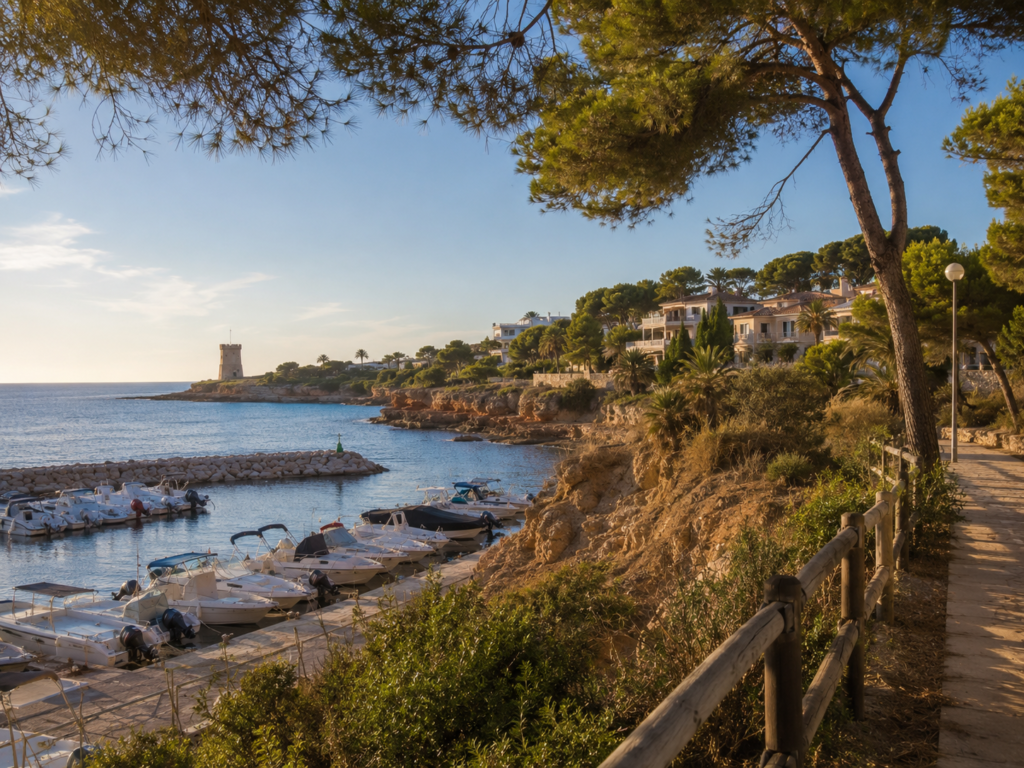
Cabo Roig is a coastal residential area with villas, beaches, marina surroundings, coastal paths and an established international community.
It offers a different residential feel from larger towns such as Torrevieja, with greater emphasis on villas, coastal surroundings and second-home use.
Best For
Villas, second homes, coastal lifestyle, beach access and international residential convenience.
Guardamar and La Mata show why Costa Blanca South should not be reduced to golf resorts and urbanisations. Both have strong natural environments and distinctive coastal identities, while Torrevieja, La Zenia and Cabo Roig offer very different combinations of town services, international communities and residential development.
Costa Blanca North vs South: Decision Matrix
Use this Costa Blanca North vs South comparison to identify where your property search may be more practical to begin.
It is not a scoring system and does not mean that every northern or southern location follows the same pattern. Individual towns, neighbourhoods and properties should always be compared on their own merits.
| Priority | Costa Blanca North | Costa Blanca South |
|---|---|---|
| Landscape | Generally greener, steeper and more dramatic | Generally flatter, more open and easier to navigate |
| Beaches | Coves, rocky coastline and sandy beaches around established towns | Long sandy beaches and broader coastal stretches |
| Villa settings | Strong choice of hillside, sea-view and lower-density villa areas | Villas within coastal, golf and inland residential developments |
| Apartments | Town centres, promenades and established beach locations | Coastal towns, beach areas and managed residential developments |
| Terrain | More hills, elevation and winding residential roads | Flatter terrain in many coastal and residential areas |
| Walkability | Good in selected town centres; more variable in hillside and villa areas | Good in selected towns; still variable inside large urbanisations |
| Car use | Often more important outside established town centres | Can still be important despite flatter terrain |
| Residential setting | Established towns, marinas and lower-density villa neighbourhoods | Towns, international communities, golf areas and urbanisations |
| Airport access | Journey times can be longer from the more northern towns | Many southern locations offer more direct access towards Alicante-Elche Airport |
| Maintenance | Can be higher with villas, private plots, pools and hillside structures | Often easier with apartments and managed communities, although community fees may apply |
| Useful starting point | Scenery, villas, established towns, privacy and distinctive landscapes | Sandy beaches, convenience, apartments, managed communities and airport access |
Do not let one attractive feature decide the entire search. The right Costa Blanca area is usually the place where your priorities for property type, accessibility, maintenance, services and everyday lifestyle overlap.
Questions to Answer Before You Book Costa Blanca Property Viewings
A property viewing trip becomes much more useful when you have already decided which daily routines, property types and compromises are realistic for you.
Answer these questions before individual homes start influencing your decisions. They can help you rule out unsuitable areas and arrive with a much clearer Costa Blanca shortlist.
Will You Own or Rent a Car?
This can completely change which towns, urbanisations and hillside areas are realistic.
If you expect to live without a car, prioritise the exact walking routes to shops, healthcare, restaurants, public transport and the beach rather than relying on straight-line distances on a map.
How Often Will You Use the Property?
A permanent home and a property used for a few short visits each year may require very different locations.
Frequent short stays can make airport access, easy maintenance and lock-up-and-leave convenience more important, while longer stays may justify travelling further for scenery, privacy or a particular town.
Apartment, Townhouse or Villa?
Choose the property type according to how you want to live, not only how the home looks during a viewing.
Consider maintenance, outdoor space, community fees, stairs, parking, privacy and the amount of time the property may remain empty.
How Important Is Walkability?
Decide what “walkable” actually means for you.
Do you want to walk to the supermarket, beach, restaurants and healthcare, or are you comfortable driving for most everyday journeys?
A property described as close to town may still involve steep streets, poor pavements or an impractical return journey.
How Much Maintenance Is Acceptable?
Private pools, gardens, large plots and hillside villas can offer more space and privacy, but they also create additional maintenance.
If you want a simpler second home, an apartment, townhouse or managed community may be easier to look after from abroad.
Will the Property Stay Empty for Long Periods?
If the home will regularly remain unoccupied, think about security, exterior maintenance, ventilation, community support and how easily problems can be managed while you are away.
This can affect both the type of property and the residential setting you choose.
Do You Have Mobility or Accessibility Requirements?
Do not judge accessibility only by the property itself.
Check the street gradient, steps, lift access, parking, route to services and ease of access for visitors. Hillside areas and older buildings can create challenges that are not obvious from listing photographs.
Do You Need Year-Round Activity?
If you plan to relocate, retire or spend long periods on the Costa Blanca, check how the area works outside summer.
Look at open shops and restaurants, healthcare, public transport, local activity and the number of permanent residents during quieter months.
How Will Family and Friends Reach You?
Think about more than the airport journey.
Consider whether visitors will need a car, whether they can walk to shops and the beach, how parking works when the property is full and whether the home remains practical for different ages and mobility levels.
Which Compromise Is Easier for You to Accept?
No Costa Blanca area will provide every advantage at once.
You may need to choose between views and walkability, privacy and convenience, a larger property and lower maintenance, or a quieter setting and easier access to services.
The most useful shortlist is often the one built around the compromises you can comfortably live with.
How to Plan a Costa Blanca Property Research Trip
Your first Costa Blanca property research trip should not be about forcing yourself to find a home.
Use it to rule out unsuitable areas, test the assumptions you made while researching online and create a stronger shortlist before you focus on individual properties.
Choose Contrasting Areas
Visit locations that offer genuinely different lifestyles rather than viewing several areas that feel almost identical.
Compare at least one northern and one southern location, and include different residential settings such as a town centre, beach neighbourhood, urbanisation or villa area.
Walk the Daily Routes
Do not experience every area from an estate agent’s car.
Walk from promising locations to shops, the beach, cafés, parking and public transport so you can understand gradients, pavements, traffic and realistic journey times.
Return at Different Times
A street can feel completely different in the morning, afternoon and evening.
Revisit the areas you like to understand traffic, parking, noise, local activity and how the neighbourhood feels when you are not in the middle of a property viewing.
Score the Area Before the Home
Evaluate the location before allowing a renovated kitchen, swimming pool or sea view to dominate the decision.
Record your impressions of walkability, services, accessibility, atmosphere, maintenance and travel requirements, then compare the property itself.
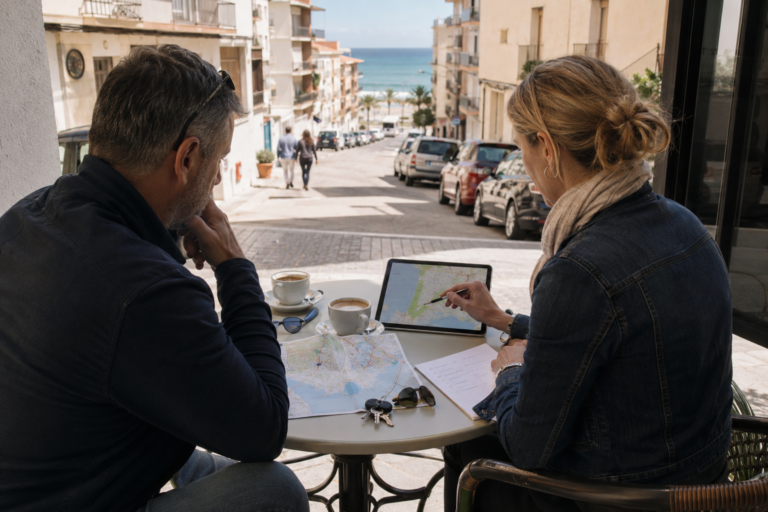
Tell Us What You Need from a Costa Blanca Area
You do not need to know the exact town before asking for help.
Tell us how you plan to use the property, whether you expect to drive, which daily routines matter most and what you would prefer to avoid.
Costa Blanca Spain can use that information to help you identify towns and residential settings that deserve further research before you focus on individual properties.
Please do not send passports, bank details, property deeds or other sensitive documents through this form.
Email Costa Blanca Spain
For general questions about Costa Blanca areas or your property research.
contact@costa-blanca-spain.co.uk
Ask a Costa Blanca Area Question
Send us a short message if you are comparing specific towns, property settings or lifestyle priorities.
Continue Your Costa Blanca Property Research
Explore Costa Blanca Towns and Areas
Compare individual towns and residential areas by property types, walkability, beaches, services, scenery and everyday lifestyle.
Start Your Costa Blanca Property Search
Already have a clearer idea of the area, lifestyle or property type you want?
Tell us your budget, preferred locations, property type and buying timeframe so you can begin narrowing the search.
Ask a Specific Costa Blanca Property Question
Need help comparing two locations, understanding a particular residential setting or deciding which areas deserve more research?
Contact Costa Blanca Spain with your question and the context behind your property search.
Do You Have Costa Blanca Property to Present to International Buyers?
Costa Blanca Spain helps international buyers research where to buy, what type of property may suit them and which areas deserve further attention.
Estate agents, property developers and private sellers can apply to present selected Costa Blanca properties to an English-speaking international audience.
Property submissions are reviewed before publication, and the identified agent, developer or seller remains responsible for the property and the transaction.
Frequently Asked Questions About Costa Blanca North and South
Is Costa Blanca North better than Costa Blanca South?
Neither side is universally better. Costa Blanca North may better suit buyers prioritising mountain scenery, coves, established towns and hillside villas. Costa Blanca South may better suit buyers prioritising sandy beaches, flatter surroundings, apartments and international residential developments. The correct choice depends on the buyer’s routine, property type and acceptable compromises.
Where does Costa Blanca North begin?
Costa Blanca North and South are practical property-search labels rather than separate administrative regions with one universally agreed boundary. Costa Blanca Spain uses Alicante and its surrounding area as a practical reference point when organising northern and southern town guides.
Is Costa Blanca North more mountainous?
The northern coast is generally greener, steeper and more mountainous, with coves, cliffs and hillside residential areas. Individual town centres and beachfront districts may still be relatively flat and walkable.
Does Costa Blanca South have better sandy beaches?
Costa Blanca South is strongly associated with long sandy beaches and broad coastal stretches. Costa Blanca North also has sandy town beaches, but its coastline includes more rocky coves and irregular terrain.
Which side is better for villas?
Both sides offer villas. Costa Blanca North has many hillside and sea-view villa environments, while Costa Blanca South offers residential villas within coastal areas, golf communities and established urbanisations. Maintenance, access and location should be compared carefully.
Which side is better for apartments?
Apartments are available throughout the Costa Blanca. Buyers can find town-centre and beachfront apartments in northern towns such as Calpe, Denia and Benidorm, as well as extensive apartment choices in Torrevieja, La Mata and southern coastal developments.
Is Costa Blanca South always flatter?
Many southern coastal areas are flatter than the northern hills, but not every street or development is level. Buyers should test the exact walking route and property access rather than relying on a general regional description.
Which side is better for retirement?
Retirement buyers should prioritise accessibility, healthcare, year-round services, winter sunlight and property maintenance. Suitable retirement locations exist on both sides, so the exact town and neighbourhood matter more than the regional label alone.
Can Costa Blanca Spain help me choose an area?
You can send Costa Blanca Spain your budget, intended use, preferred property type, mobility requirements and lifestyle priorities. We will review the information and may help you identify towns or property environments that deserve further research.
Start with the Right Costa Blanca Area, Not Just the Right-Looking Property
Tell us how you want to use the home, which daily journeys matter and what compromises you want to avoid.
A clearer area shortlist makes every later property decision easier.